At dinner, we’d reconnect. Our paces were different. I, for one, didn’t want to walk with others. I wanted to be alone, solitary with my thoughts and the path. We’d all arrive at different times in the late afternoon at each inn. My suitcase would already be in my room, waiting for me.
Ritual one: pull out the lacrosse ball and roll my foot arches until they released with each step. Roll out my ankles, my calves, my thighs. Then, lay on the tatami mat and let my mind absorb what I had just done. Feel the weight of accomplishment.
Ritual two: after some time, I’d change and go to the thermal bath. Each inn had one. Some with views of the valley below, some open to the cold mountain air outside. I’d wash and soak. Never after dinner, always before, as is the way here.
Walking this old path, the Nakasendo (中山道), which has been walked for hundreds of years between Tokyo and Kyoto, gave me a sense of community with all those who had walked it before. I found myself today wondering who was the first person to walk this path, and if they felt accomplished and free of the weight of their thoughts and the world when they finished it.
That night at dinner, I had a bottle of sake and talked with the other hikers about the day’s highlights. I told them about the old man I saw. I had just come around a particularly stunning corner where the path reminded me of a terrazzo floor, covered with leaves in colors you couldn’t make up if you wanted to. Around that corner, there was a house with a small garden. An old man was sitting outside, legs crossed, smoking a cigarette in a way that looked like they were filming a noir film. There was a calico cat wandering around his legs. I bowed and said, “Kon’nichiwa,” and he bowed slightly, just his head, and returned the gesture.
No one else saw this particular noir gentleman and his calico cat, but we all passed across the bridge where you could see a waterfall, and we all agreed that the foliage rivaled any we’d ever seen in our lives.
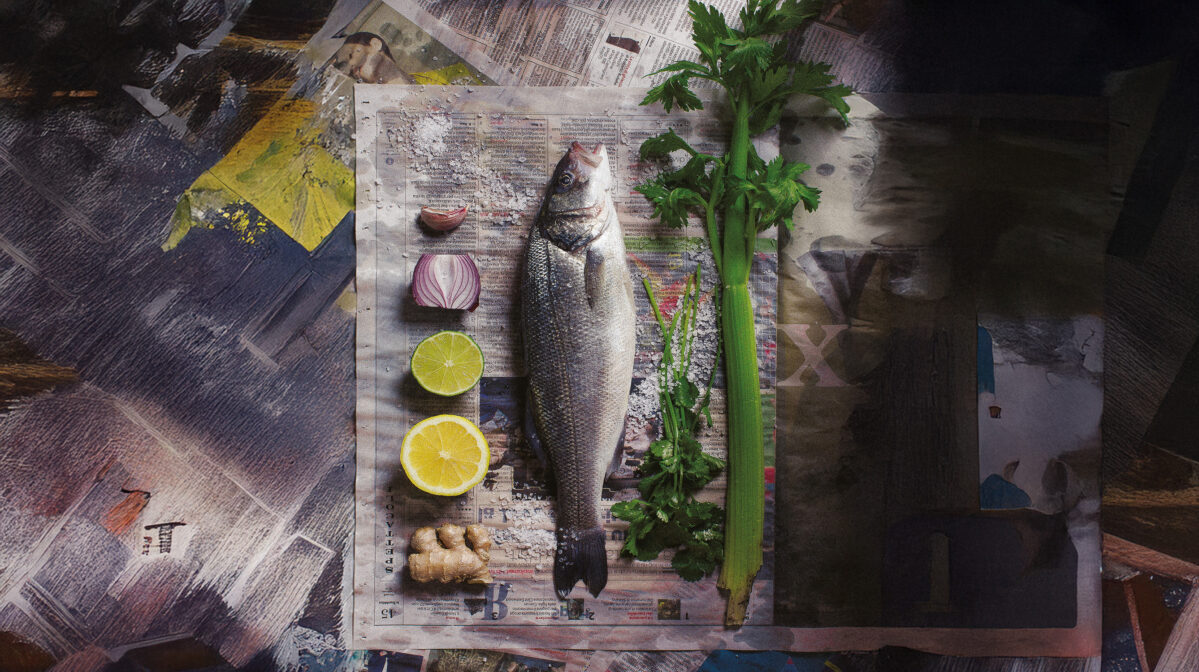
Later, the innkeeper brought in a second course. This time, a tray with a small gas cooker, very small, enough for one bowl. Inside were some thinly sliced duck, a few mushrooms, tofu, and a couple of vegetables. Along with this was some salad, a small whole fried fish, miso soup, numerous small bowls of pickles, and always, rice. The instructions were to let the duck cook, and by the time we had eaten the rest, it would be perfectly tender and ready.
The stories continued, and I slowly drained the bottle of sake. Somehow, I realized on this journey that sake doesn’t hit me like, say, wine or a cocktail does. Maybe it’s because we ate slowly. Dinner might start at 19:00, early for me, but typical for mountain towns in Japan. Maybe it’s because my body, after the day’s exertion of hiking with my pack, would accept any form of drink and turn it into a deep, restful slumber later on, thankful for the energy it provided.
On a day when the trail took me over a high mountain pass, when the climb was steep, hard, cold, on a day when it snowed, and on a day when the number of bear bells I rang seemed concerning, I passed no one. I wondered who knew I was on this trail and if I didn’t show up by a certain time, would anyone come looking for me? This being Japan, though, my phone kept a strong signal for the entirety of the climb. I turned it on airplane mode, not wanting any interruption to my mental state that day. Not wanting news from any place. No notifications. No music.
At the top, I took a short break and drank a can of cold espresso I picked up earlier that morning at a 7/11 before starting out. Energy. It was slightly sweet, but not cloyingly so. At this juncture, the top of the mountain, there was a shrine. Statues from times long ago still stood. The wind had calmed down, and the sky looked silver. More snow would come, I thought.
I tried to take the descent slowly. I looked at the time, and I thought I might be a little earlier than I had hoped to be. I get concerned sometimes, hiking up and not knowing exactly how steep, how tricky, how difficult it might be, so I push myself harder, quicker, faster, to get to the top, only to be amazed, actually, at how I did it. So I took my time and descended at a slow pace. Two hikers passed me, the first I’d seen all day. They were not in my group. I heard them coming because of the bear bells they rang in the distance.
In the old post town below, where travelers and pilgrims like myself would stop for supplies, to rest, have a meal, I found a café. Ritual three: arrive at my destination and find a café for a cup of coffee. This town was well-preserved, much like the others I had passed earlier in the week. Japan has a love of coffee that goes far and wide, and I discovered that it’s not hard to find an excellent, almost obsessive cup. This town was no different, and the café was warm, with about five seats along a bar. It was crammed with antiques, old photos. The man behind the counter, I guessed to be 70, and his wife of a similar age. Their dog wandered around; they said he’s 17, and I laughed, surprised. The menu was short—the only choices were what kind of beans, as the menu explained, they only brewed coffee via the siphon method.
Now, the siphon method setup resembles a laboratory. It’s not for everyone, yet I could tell he was a master. Occupying three of the other seats were some teenagers who were celebrating a birthday. I said “Happy Birthday” in English, and they answered in English. “Where are you from? What are you doing? Why are you walking?”
Placed into a china cup, the coffee exuded precision and elegance. The snow was really coming down outside, and my mind started to drift to the idea of the journey, of walking. I wanted to answer the teenagers in the café. But what do you say? It made me think of my walk, and encountering people on the street who don’t know what you just accomplished, what you had seen that day, how you felt, that your legs ached because you walked for six hours over a mountain pass in snow, and now this $4 cup of coffee was bringing your mind back to the world. When I left, I paid their bill and mine. The town was getting quiet, and I felt like the couple wanted to close up and go upstairs where they lived and dive into a sleep of ages.
I’ve been home for some time, but I’ve not had the chance to fully understand what it is that I did, where it was that I went. Japan is a ten-day dream that I’m still thinking about. It’s sticking with me. I lay down the other day for a nap and just cried, aware at that moment of not only how different I am from other people but also of what exactly it was that I accomplished with that trip. A return, somehow, to a place I’ve been before, but not knowing then how much it would mean to me in the future. I’m changed. My friend B asks if it’s for the better, and I say yes, definitely.
University of Pollenzo
The world's first university entirely
dedicated to food sciences