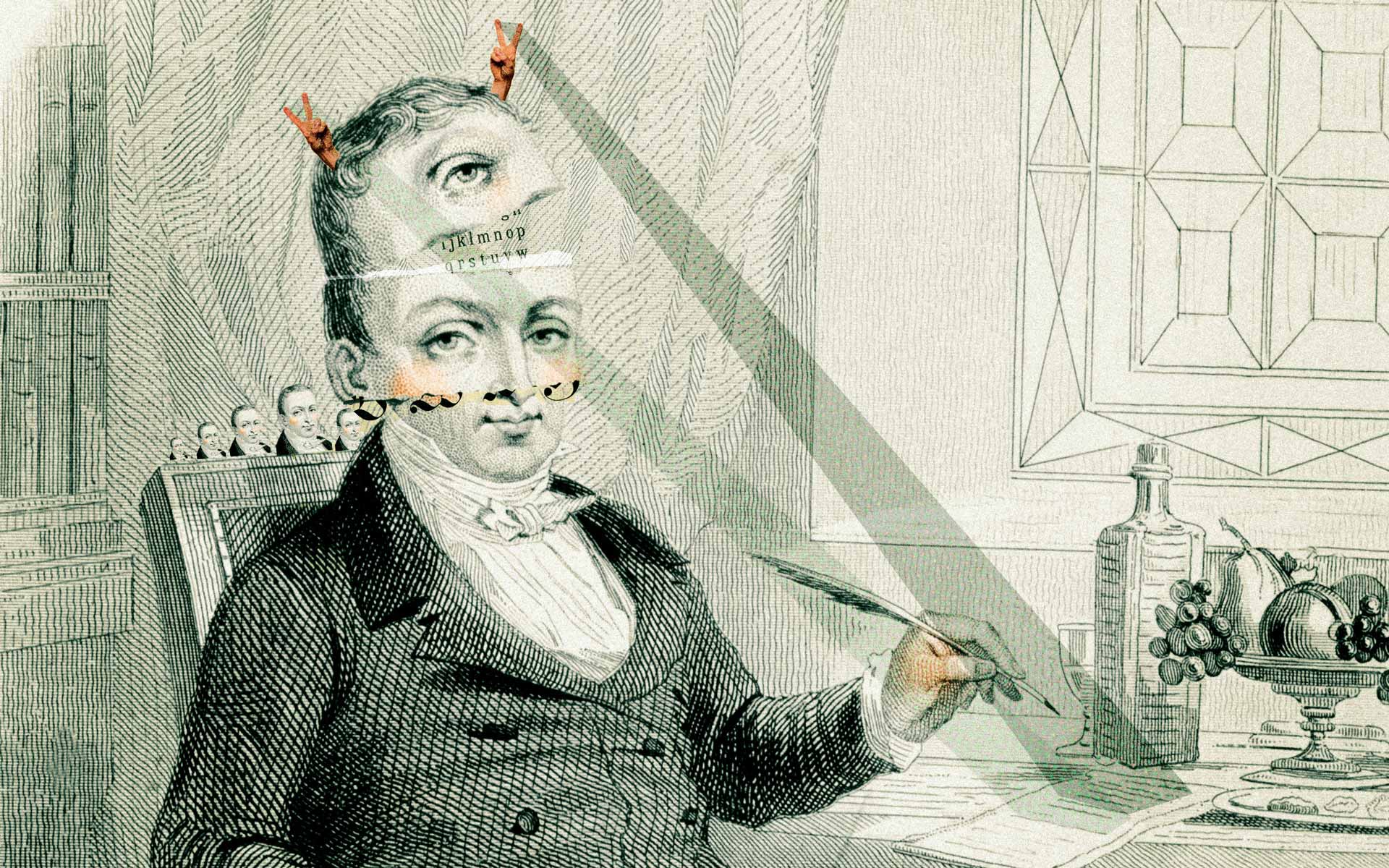
A figure who should be known to anyone involved in the field of gastronomy — some for work or profession, others for study reasons, and many for pure passion. Gastronomic sciences, therefore, are part of our lives. In general, we can say that all humanity, "as it nourishes itself," deals daily with gastronomy. The meaning of this statement was developed and described fully and comprehensively in the literary work of the principal master of modern gastronomy. His name was Jean Anthelme Brillat-Savarin, and he lived between the 18th and 19th centuries; the work that immortalized him is titled The Physiology of Taste.
Since its publication in 1825, this book has had no equal in terms of copies sold, number of editions, and translations. Remaining present for two centuries in the world publishing scene is irrefutable proof of its value and the relevance of its contents. The Physiology of Taste is a work on the general principles of gastronomy. This word, which derives from Greek, although today universally known and even overused, had just been coined in Brillat-Savarin's time. The book thus establishes and consecrates it through principles and descriptions that have the merit of involving readers. The great achievement of the author was the spread of correct ideas and accurate facts with a delightful style. The science he intended to spread is physiology — we would call it today phenomenology — of taste.
But it is precisely the style that is the fortune of this book, belonging to the heroicomic genre, which has unfortunately disappeared. As Jean François Revel emphasizes in the introduction to the 1981 French edition: "We have lost the taste for composite composition. Hiding the banal under the solemn or the serious under the comic... Today it is a skill no longer understood."
Thus, the chapters of the book become meditations, the aphorisms become truths of common sense, and the personal life stories (in the second part of the book) serve to highlight the principles he upholds. I want to quote Revel again: "The amiable style makes The Physiology of Taste much more than a historical document: it becomes the missal of the decriminalization of the modern Epicurean."
For these reasons, I believe it important to suggest reading this text; I am sure that for many it will be a pleasant discovery, and for those who already know it, I am certain that a second reading will be even more enjoyable than the first. I want to tell you with complete frankness that the framework of Slow Food, Terra Madre, and the University of Gastronomic Sciences has been strongly influenced by the ideas contained in this book — ideas that must not be taken literally but revisited with the same benevolence as the author. If the style of the book is heroicomic, our approach must be playful. Playfulness helps us overcome the inconsistencies of the text and of the character, who belonged to a world two centuries ago. For this reason, the reflections I develop in these pages are not only a late review of a great book but also an awareness of the theoretical roots of our work.
"I want to tell you with complete frankness that the framework of Slow Food, Terra Madre, and the University of Gastronomic Sciences has been strongly influenced by the ideas of this book."
To be clear, as an example, I will talk to you about two meditations and an aphorism that have crossed time to reach us. First of all, Meditation III "On Gastronomy," beginning with its definition:
"Gastronomy is the reasoned knowledge of everything that relates to man as he nourishes himself."
This statement is the premise to understand how gastronomy is interconnected with the most diverse disciplines of human life: natural history, physics, cooking, commerce, and even political economy. Precisely, this concept of multidisciplinarity is the main pillar of gastronomic sciences.
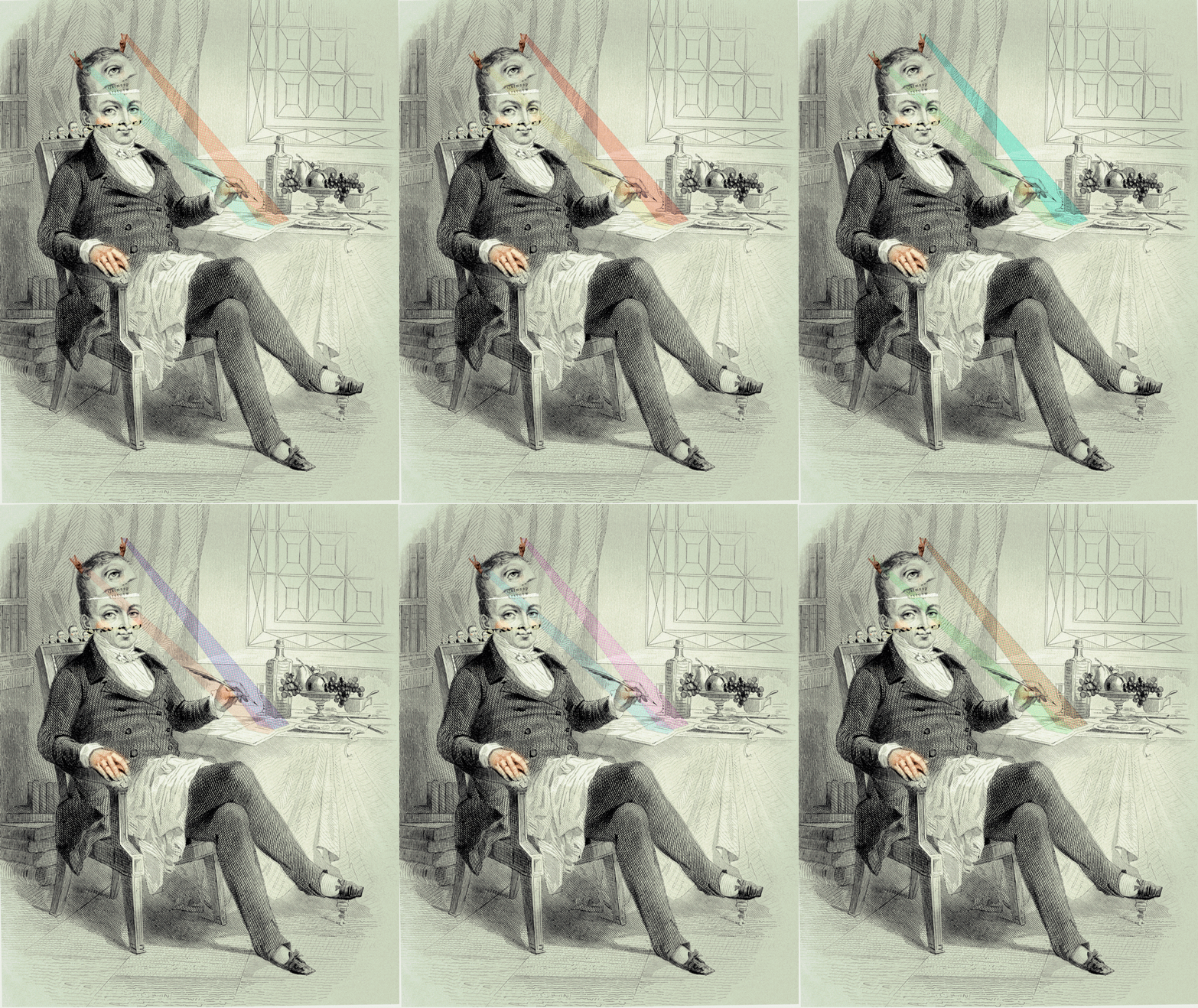
I would like to recall here how, in the second chapter of Good, Clean and Fair, not only did I revisit these basic concepts, but I extended them to disciplines such as ecology, sociology, and anthropology, which in Brillat-Savarin's time either did not exist or did not have today's complex meaning. The same structure of my book, written in collaboration with Carlo Bogliotti, refers to The Physiology of Taste, where, in addition to theoretical content, I include my personal stories to support ideas and, I hope, enhance the pleasure of reading.
At the conclusion of this third meditation, under the heading "Academy of Gastronomers," Brillat writes: "This is, at first sight, the task of gastronomy, a fertile field of results of all kinds, and one that cannot but grow with the discoveries and works of scholars who will cultivate it: because it is impossible that, within a few years, it will not have its own academics, lectures, professors, and prize competitions."
Such was his optimism regarding the realization times of this "prophecy" and such his amazement that it was not cultivated and realized in beloved France. No one can dispute that the first University entirely dedicated to Gastronomic Sciences was established in 2004 in Pollenzo, Italy.
"Because it is impossible that, within a few years, it will not have its own academics, lectures, professors, and prize competitions."
I would then point out another meditation, the XXVIII, precisely "On Caterers." Here Brillat-Savarin describes the birth of the phenomenon that was modern catering. After the French Revolution, the development of this reality shaped social behaviors, literature, and gastronomic guides that still influence the general public today. The text was written in 1825, at the beginning of this epic, but the author was fully aware that the transformation would remain in history. He investigates its genesis and simultaneously analyzes its models, giving us a critical-historical reference framework.
The first restaurant was opened in Paris around 1765 by the cook Boulanger. In 1789, the Revolution abolished the service obligation of cooks to courts and nobles. These now-unemployed cooks made their talents available to the few restaurants existing at the time, and the bolder ones became restaurateurs themselves. Thus, the fifty or so restaurants active during the revolutionary period grew into several thousand in the early 1820s.
I would like to remind everyone that in December 1989, the founding of Slow Food was consecrated in Paris on the bicentennial of the French Revolution, celebrating the birth of modern catering. Some of you were there and surely remember the enthusiasm and playfulness of that emerging project.
Finally, one more political and cultural reflection that, through all these years, has maintained great relevance. I refer to Aphorism III:"The destiny of nations depends on the way they nourish themselves."
In 1825, Brillat-Savarin condensed the profound meaning of food sovereignty, which found full political recognition only at the end of the last century. As you can see, there is a red thread connecting the history of Slow Food's ideas and contents with the themes of The Physiology of Taste.
"After the French Revolution, the development of this reality shaped social behaviors, literature, and gastronomic guides that still influence the general public today."
In support of the reading of The Physiology of Taste, I also recommend Gastronomer and Judge by Giles Mac Donogh, which I consider an excellent biography of Jean Anthelme Brillat-Savarin. The author's qualities and references are widely described in the preface by my friend Maurice Bensoussan. Reading this book is highly recommended not only to understand the character and merits of the author of The Physiology of Taste but also to realize how this text was born from a particularly lively historical moment. I want to recall in three points how important it is to know Brillat's life and the context in which it unfolded.
First, it is important to understand how the basic education of this extraordinary man took place in the deep French province. In those lands of Bugey, which a century before the birth of our gastronome belonged to the Duchy of Savoy, the young Jean Anthelme's formative years and apprenticeship developed. In 1781, he was a brilliant magistrate in his hometown, Belley. In this role, he was chosen as a deputy for the Estates General representing the Third Estate. The Assembly, in which young Brillat-Savarin was co-opted, experienced the most significant movements of the Great Revolution. It is not hard to imagine the cultural shock experienced by the young magistrate, catapulted from a small provincial town into the heart of revolutionary Paris. Without this trauma, the whole story we are telling would not exist.
econd, I would highlight his wandering life from Paris to Geneva and then to Boston, returning to his homeland in 1796. Escaping the persecutions of the Terror, his political wandering became a great life experience — a cosmopolitan adventure by no means guaranteed at the end of the 18th century.
Lastly, what fascinates and amazes me most about this human adventure is linked to the genesis of his literary masterpiece. The Physiology of Taste was published in the fall of 1825 at the author's expense because he had not found a publisher willing to print it. Distributed sparingly in the Paris area, it aroused moderate interest. A few months later, on February 1, 1826, Jean Anthelme Brillat-Savarin died of a sudden and fatal pneumonia.
"It may take patience before recognition or profit arrives. But beware: neither recognition nor immediate profit are the only parameters to assess the worth of an idea."
The manuscript did not find appreciation among the heirs. Mac Donogh reports: "It is said that Colonel Frederic (the deceased's brother) dismissed The Physiology of Taste with the comment: 'What the devil are we supposed to do with this? Let's get rid of it.'" The rights were sold for 1,500 francs, and from there started the endless proliferation of editions all over the world. Essentially, the author did not even suspect the immense fortune of his work!
This ending of the story becomes, in its own way, a reason for reflection. Never believe that good works must materialize immediately through success. Every activity we undertake, if realized with care and honesty, deserves to be completed. It may take patience before recognition or profit arrives. But beware: neither recognition nor immediate profit are the only parameters to assess the worth of an idea.
I conclude by imagining this invitation to reading as an invitation to the table; thus, with the necessary variations, Aphorism XX of The Physiology of Taste fits perfectly:
"Inviting someone is to take responsibility for their happiness for as long as they are under your roof."
University of Pollenzo
The world's first university entirely
dedicated to food sciences